
vDOC.AI
Where students prepare for the complexity of real-world patient care,
using the most realistic virtual patient encounter's ever created.

Medical Students and Residents are already using vDOC


.svg)
"vDOC really emphasized the importance of focusing on the VITAL SIGNS when entering a room. How to navigate looking at and ORDERING LABS. As well as help emphasize different antibiotics when treating various infections. What sticks out to me the most is how your treatments actually help the patient get better, or deteriorate, it really makes it feel LIFELIKE and REALISTIC."

Jay "John" Bumgarner

"vDOC uses episodic memory, do you remember what happened as a result of what you did? I think that is what is special about vDOC. I really did feel responsible for interacting with the patient properly. It felt significant. vDOC is way more enjoyable and realistic than any other kind of studying I have ever done."

Jacob Long

"vDOC gives an opportunity to go through the motions, get a proper history. Remembering to ask about family history, surgical history, medical history, to really develop that muscle memory, and develop those routines. I was not taught to do that. That was a big transition for me, when I started residency."

Dr. Jon Sidlow, MD

"With limited patient interaction in the first two years of medical school, vDOC is a great supplement in improving interviewing skills and learning to apply medical knowledge during patient interviews."

Kyle Maruj M De VeraCall
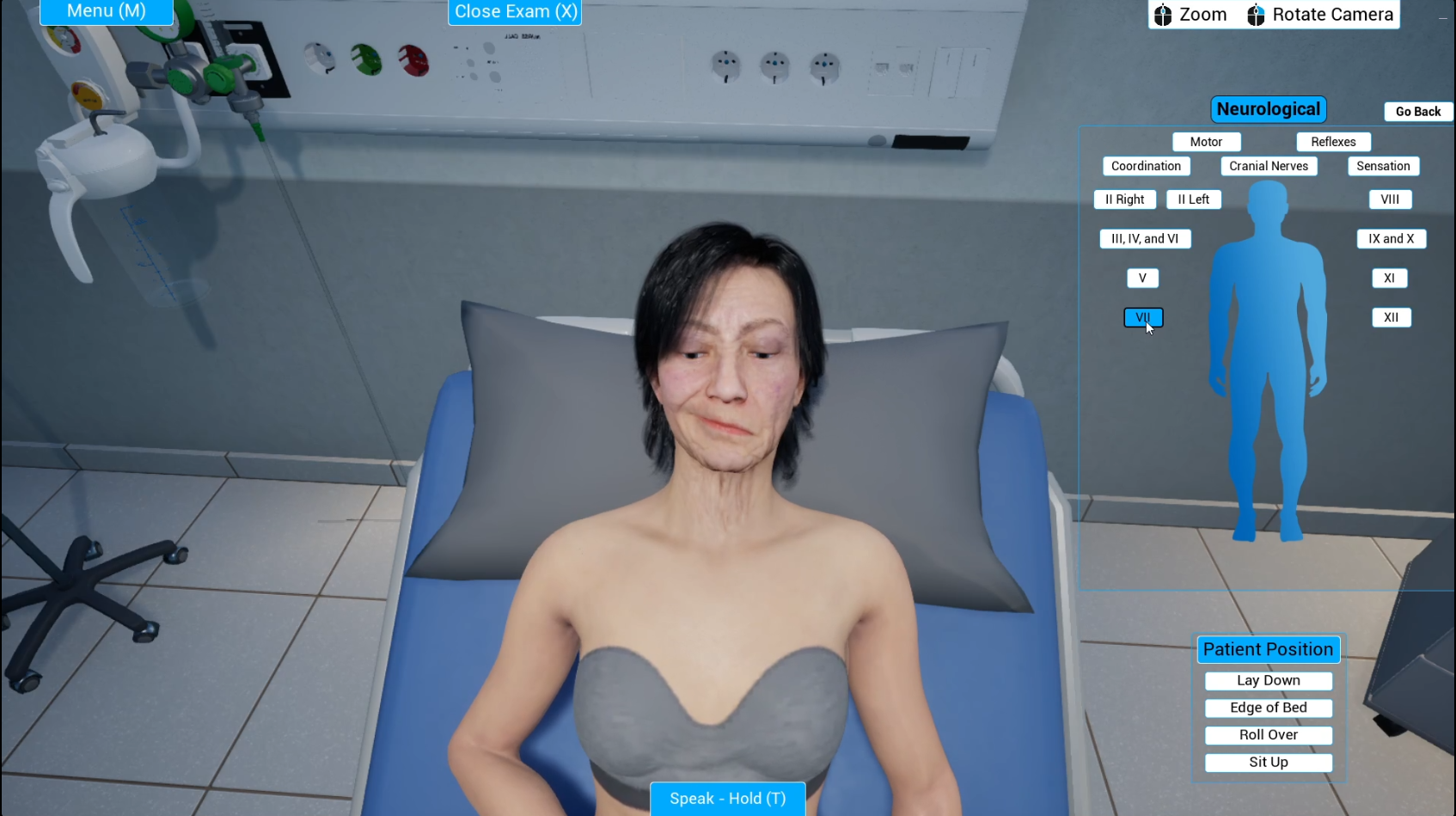
examination. Dymanic patient models that update
based on how the clinical course of the patient.
Even ask your patient to change position to examine more
closely!
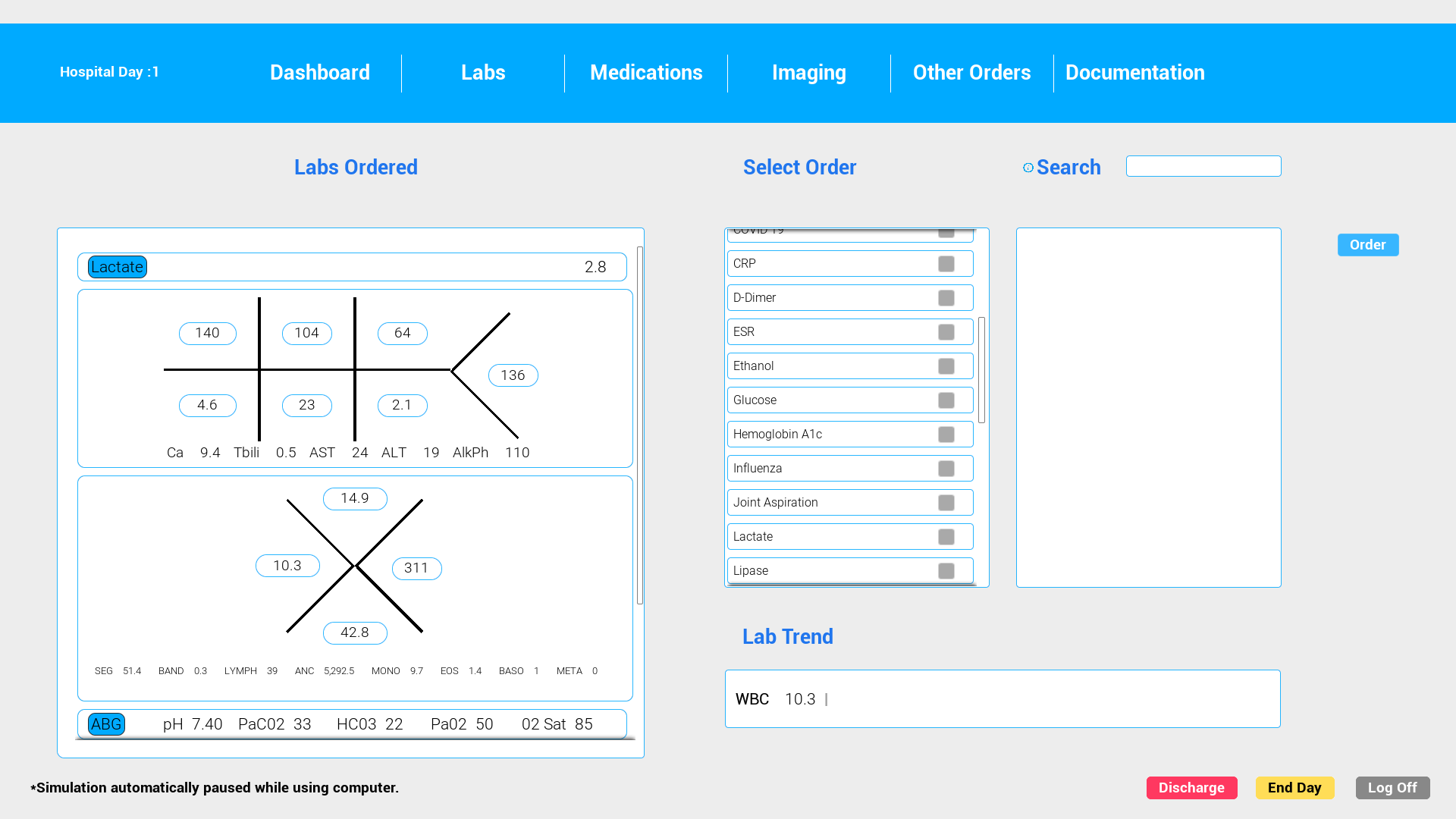
and treat your patient! Obtain and trend vital signs, order and
trend labs, obtain imaging, and perform interventions.
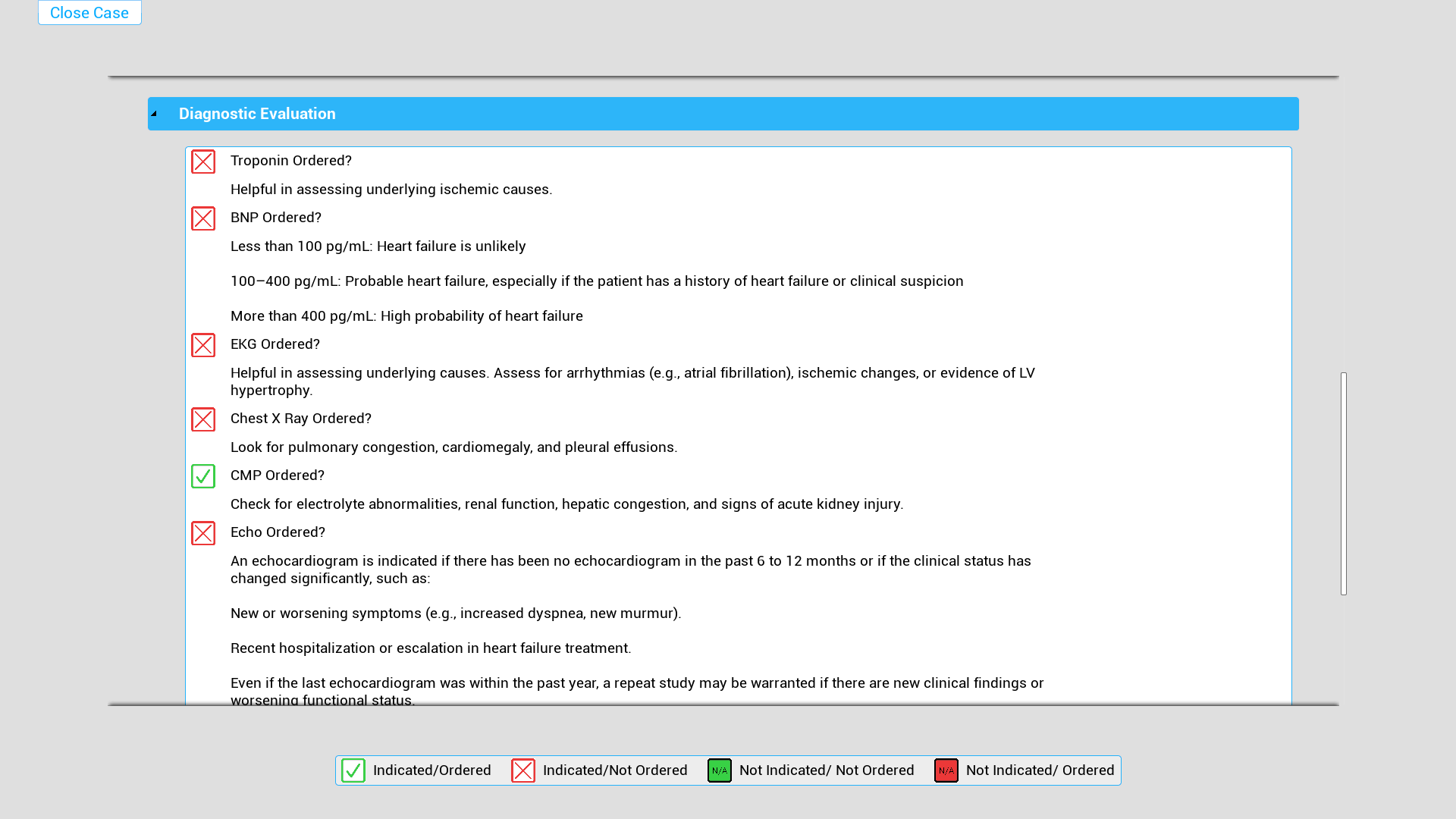
extensive evaluation of your performance.
Take advantage of the evaluation page to
reinforce the positive aspects of your care and to faciliate
learning in the areas where the evaluation and
treatment may have fallen short.
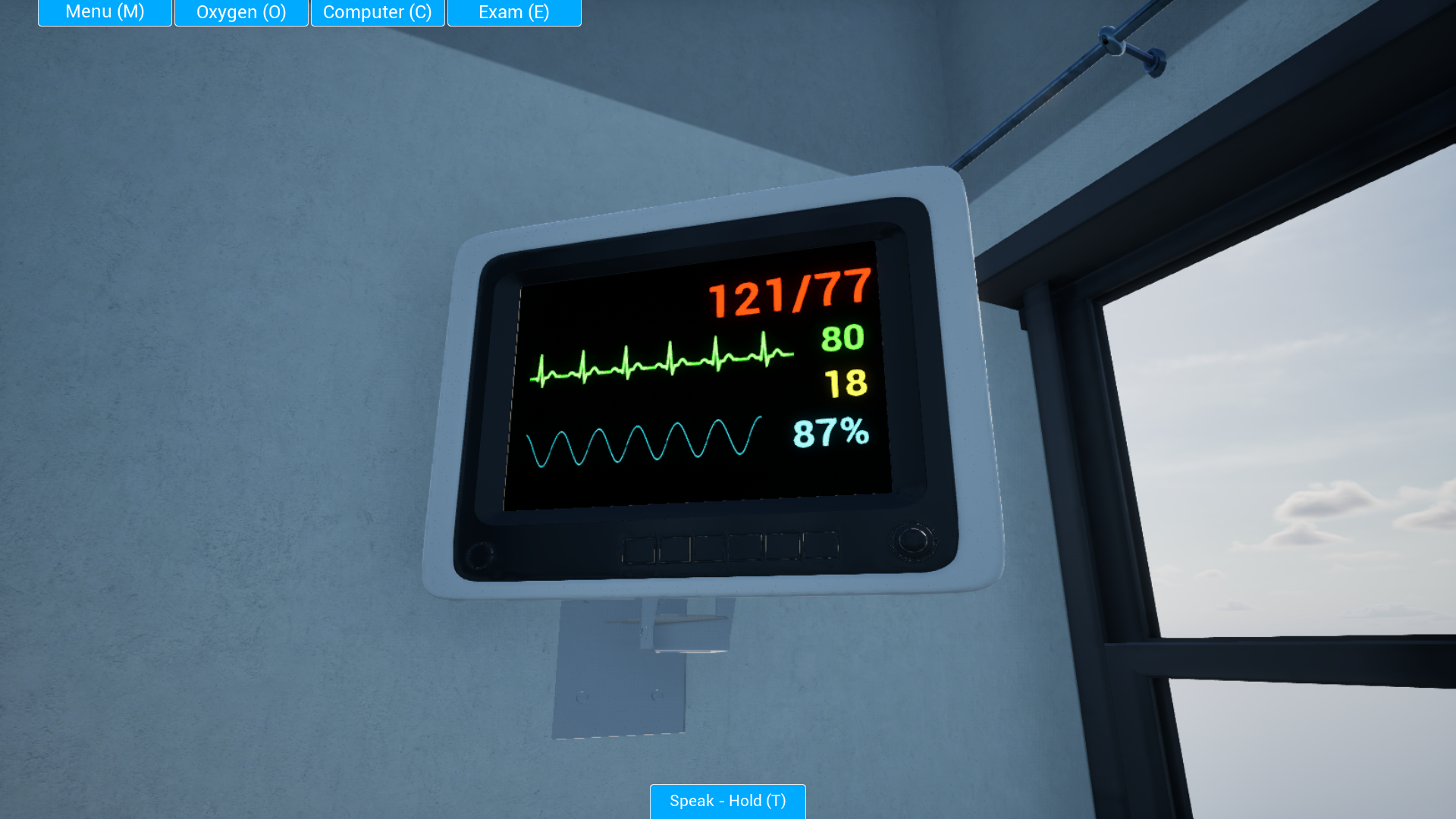
patient status are updated consistently as you progress
through the patient case.
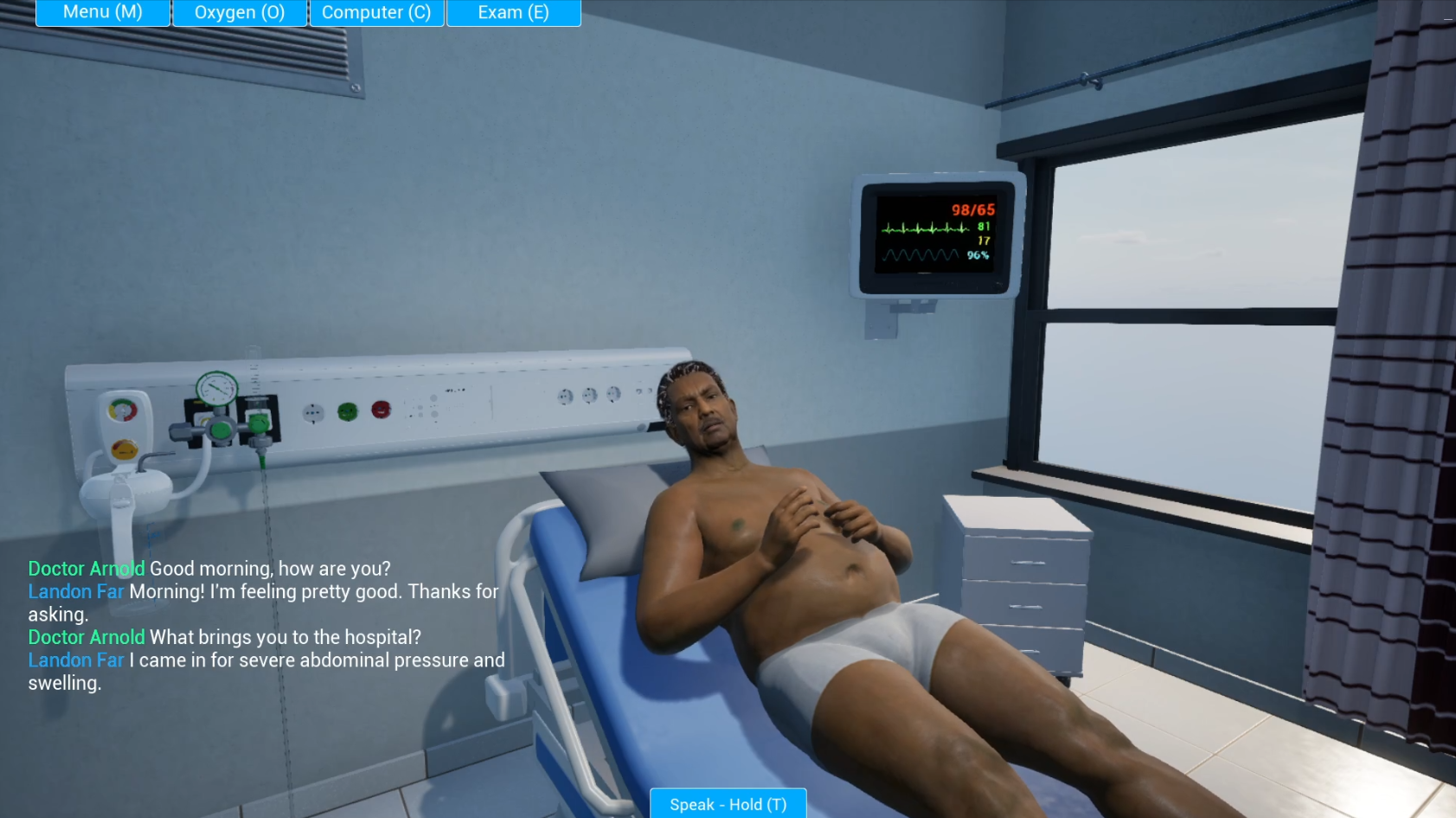
Obtain a history, perform a review of systems,
discuss code status, and much more! Patient AI is updated
as the case progresses to reflect changes
based on evaluation and treatment provided.
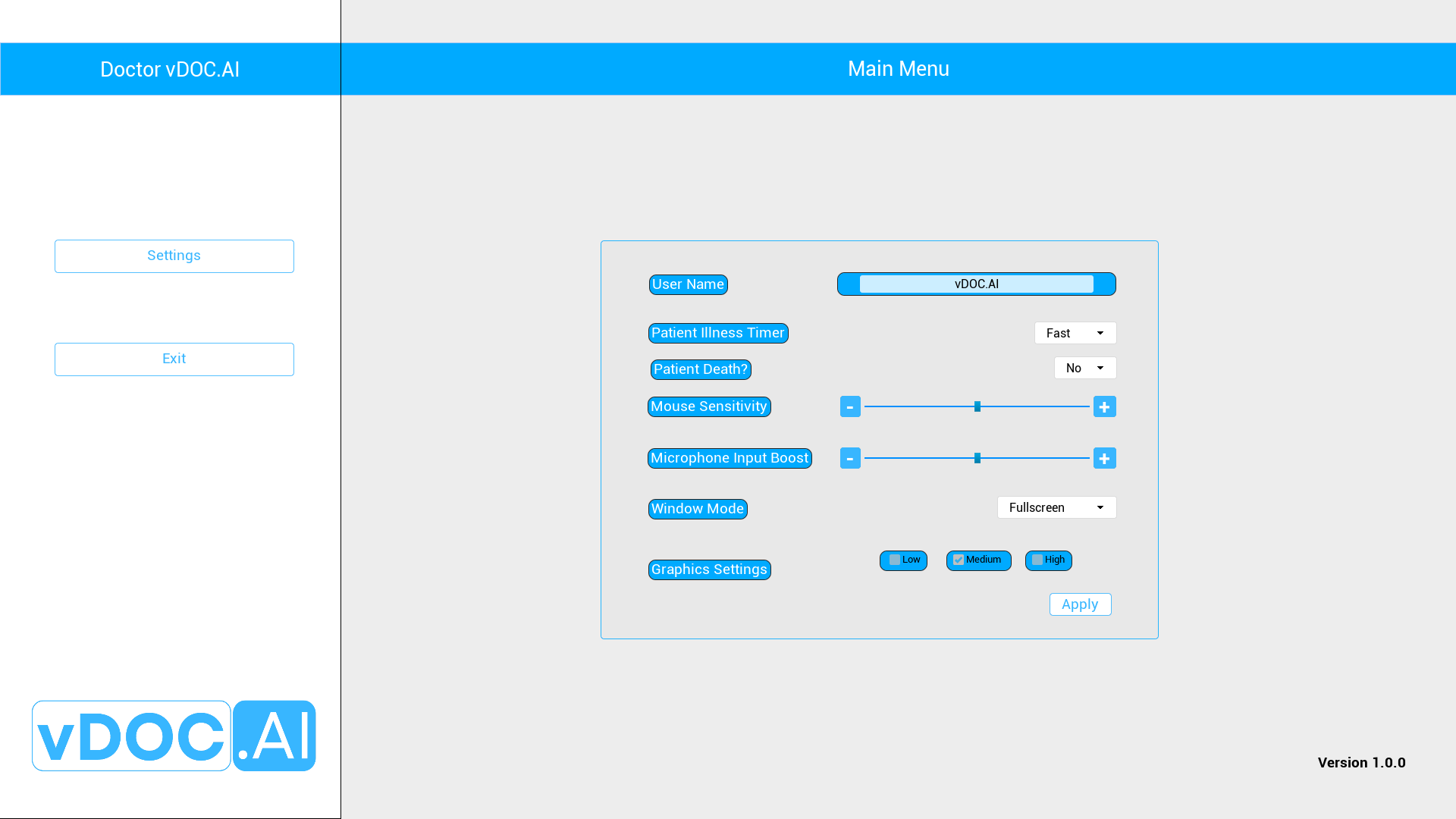
adjust how quickly the illness logic updates the patient
with slow, medium, and fast settings. A
setting also is available to determine if a patient
may die (end the simulation) or not to allow a
no stress learning experience.


FAQs
For a more complete list of FAQ's go to our About Us page.
Treatment recommendations are based on evidence-based medicine and industry-accepted best practices.
vDOC is designed primarily for medical students and residents. However, it can be valuable for a range of learners, from early medical students to practicing physicians looking to refine their skills.
No. With a paid license key, you have unlimited access to all available cases. We encourage frequent practice to maximize your learning.
We're committed to continuously expanding our library of cases and features. As vDOC grows, so will the ability to add cases. Current plans are to add news cases monthly to expand the current library.
vDOC offers a wide range of medical simulations covering various specialties and scenarios commonly encountered in the United States healthcare system. Our cases are designed to challenge and improve clinical reasoning, diagnosis, patient interactions, and treatment planning skills. Patients in vDOC react to the medical students care in real time. vDOC brings together all hospitals systems needed to perform care just like in real life, Conversational AI allows the students to practice verbalizing care and treatments, and lastly the real-time feedback as the case progresses is already proving to drastically improve information retention.